
Dubbing for Beginners – Free Exercise Inside!
Updated: Jul 1
If you’re new to dubbing, this blog will be helpful as I share my experience from both sides of the mic: first as a talent (Part 1), and later as a project manager (Part 2). There’s also a fun dubbing exercise for you to try at the end of each part, so read till the end 🤗
As a Talent / Voice Actor
Late last year, my good friend and fellow voice talent, Ezza, gave me a call. She was the voice director and was casting for a series of entertainment and educational YouTube videos for children that needed to be dubbed from Korean to English—both the spoken lines and songs. Now, I can sing, but I don’t usually. However, she said (and I quote), “singing tu sikit je” (which means “the singing is minimal”), so I said yes. I was added to a WhatsApp group and we filled out our availability.
First Session + Hurdles
I was in the final stage of recovery from a flu and sore throat. I knew I could handle the speaking parts, but singing was debatable. Still, I showed up to the studio for our very first session and met Danial, the audio engineer.
I dub the English version of the educator—here’s what the original looks like:
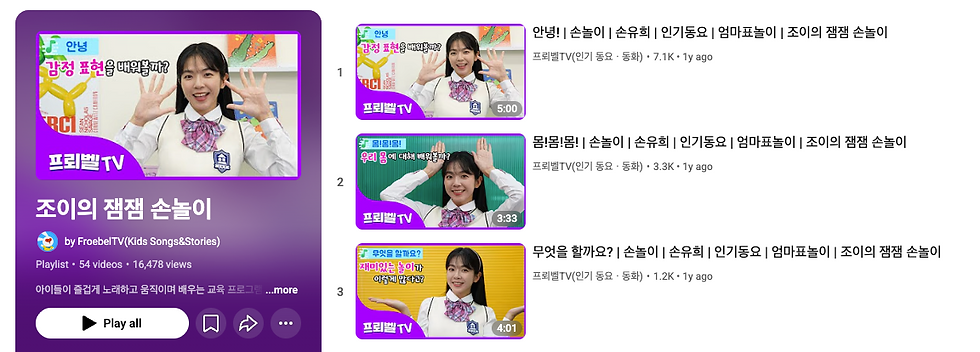
A couple of challenges:
Despite having 5 ½ years of voice-over experience, dubbing is something I’ve only done a handful of times—mostly commercials or small projects with just a few lines, or narrations where the speaker doesn’t appear on screen. So, needless to say, I was pretty inexperienced.
On top of that:
Translated text are NOT in the video
No timestamps in the script
At times, poorly translated scripts, eg. 3 Korean characters said in 1.5 seconds was translated into 15 English syllables (and vice versa)
Since none of us understood Korean, there were many times when the Korean educator was talking non-stop and we were completely lost.
It was funny the first few times. Then it turned into frustration.
We had to pause, trace back our lines, and figure out where we were. I suppose my very basic Korean helped a little—words like chingu (친구, friends), andeyo (안 돼요, no), geunde (근데, but), and maja (맞아, that’s right). Thanks to Duolingo, I could read, or at least figure out the pronunciation of certain characters.
Nevertheless, we had to change A LOT of the script. Too much, I’d say. In later sessions, we were we could stick to the script and just drag the words out.
At this point, I just want to say:
if you’re translating a dubbing project, hire a translator who specializes in dubbing translation.
It’s completely different from translating written texts. They have to consider duration, line length, number of syllables, and make sure it sounds good… well, spoken.
Anyway, since I was inexperienced and honestly didn’t know how the pros do it, I requested to watch the entire video first to make notes on which parts I needed to be faster, then we’d play the video again, where I’d try to start exactly when the Korean educator spoke. But I’d often finish the line either too early or too late. So we had to re-record. Again, and again.
Then came the singing. I was under the impression it would be about 10% of the workload. It was closer to 70%.
It was my first time having to listen to a song once, then jump straight into recording it. Danial would play it line by line, Ezza would guide me on the melody to fit the English syllables, and I would sing over the Korean voice. It was hard. Again—16 Korean characters but only 8 English syllables. We had to rewrite the lyrics or figure out how to make it fit.
My voice was not up to the task. Ezza would say, “mark for tuning” 🙈.


Yot the Malay Dubber
Ezza taught me that the way to dub is to play the original, hear the first 0.5 seconds, then jump in with the translated text. That way, you can then hear the original speaker’s intonation and when they finish the line—then you as the dubber can either drag it out or speed up to fit the duration. You’d watch the video and follow their emotional expressions as you dub.
Ezza, being the lovely lady she is, didn’t want to rush me during our first session. So even though that was the quickest way to dub, she let me do what I was comfortable with. But after hearing her method, I decided to change my approach starting from our second session. With that, I improved over the next few sessions.
Now, there aren’t many English dubbing jobs in Malaysia, but the market for Malay dubbing is substantial; after all, Malay is our national language. This project was to be dubbed into Malay as well, and so in came Yot.

Yot grew up in a family of dubbers. Her dad is a dubber, her mom is a dubber, and her brother is a dubber and audio engineer. Yot has been trained since young. So one night, when I heard she was coming in, I stayed back for over an hour just to watch her in action.
And damn, she was just on point.
Of course, there were the inevitable script changes, but you could tell Yot is very experienced. She has what I call a ‘smiley’ voice, like you can hear her smile through her speech. She sounds so sweet when she sings, not to mention how fast she picks up the melody.
Another thing I noticed: while I mimic the body movements of the original speaker (pointing at facial features, counting on my fingers, making hand shapes like animal beaks), Yot is still. She says that’s how she was trained to avoid making any unwanted noise that the mic might pick up. Literally only her eyeballs move: from script to screen, screen to script, down up, down up.
As someone who always uses body movement to guide her voice expression, I find it fascinating that this other way works too. Though it’s worth noting that the speaker in this project isn’t as animated compared to animation, anime, or cartoons.
Student in Studio Experience
Since this was a longer project, I brought 2 of my voice acting students to the studio on 2 separate recording sessions. (Want to learn voice acting? Check out this page!) I admit it added some nerves for me, but it was a valuable experience for my students to see how things are done in a studio with a voice director and an audio engineer, and specifically, how dubbing is done. They took notes and asked questions in our subsequent class.
When I first started out voice acting, I had the good fortune of meeting Su Ling. She knew I lacked experience and had only been inside a studio once. So when she went to dub for BoBoiBoy as Ying, she invited me to tag along. I didn’t take any pictures or videos for obvious reasons, but I still remember sitting behind the voice director and watching the screen while she dubbed. Most of her lines were one-takes and I was in awe. I always felt thankful for the experience 😌 Thanks, Su Ling!
TikTok Live Dub
2025 ended, and I was grateful I had learned how to dub and dub-sing. I’m felt lucky that despite my slow start and mistakes along the way, I got to do it with a good friend and patient audio engineers—all lovely to work with.
2026 came and we had a new batch to record. Materials were no longer printed out, so I used my laptop to read the lines, and Yot used her phone. I went into the sessions feeling way more confident. I was able to change lines or add extra words at the end of sentences instantly, and improved my singing skills as guided by Ezza.

This time around, because the client was really happy with how we’ve been dubbing, they gave us the green light to showcase how we dub, live on TikTok—which is really rare. Of course, that added nerves again, but it’s actually a great way to train myself on 2 things:
Firstly, when it was just me, Ezza, and the audio engineer in the studio, making mistakes didn’t feel that embarrassing. But with more people watching—like my students or a live audience—it can feel a lot more daunting.
Accept that mistakes are simply part of the job. Don’t dwell on them, just keep moving on.
Secondly, I hype myself up to feel confident. Believe that I am capable and I was chosen to record for a reason. And you should too. When you can stay confident even with people watching (and potentially judging), you know you've leveled up.
Dubbing Exercise for you to try
As promised, here is a dubbing exercise for you to try!
Below is a recording of our live TikTok session for one of the videos where I dub in real-time, so you can see what to aim for:
You can hear that the original voice comes in first, and I follow tightly after. I’m listening to the original through the headphones and matching my cadence and pacing based on it. When the audio engineer (we have Adzlan in this session—he’s Yot’s brother 😀) pauses the recording, he’ll just need to move the audio to the left a little, and bam! It all syncs up (assuming I dubbed well 😛).
Now it’s your turn!
Click on the Google Sheet link here. You’ll see the original Korean script and the translated English and Malay lines. All these lines have been updated, so you don’t need to do any changes this time (in Part 2, you’ll be dubbing those Chinese vertical dramas and will get to do script changes). As this is probably your first few times dubbing, I've included some timestamps to help you out 😉
Play the original Korean video. When she says the first line at 0:07, that's your cue to say the first English line “Sing & Dance with Bean Tots”. And off you go with the rest! If you like to challenge yourself with a song, there is a singing part at 2:03 (line 54).
I know it’s kinda hard due to the lack of translated text on screen and timestamp on the lines, but this is a real-life scenario of how it was.
I've also included the English version that I dubbed in case you'd like to reference that.
Unfortunately I couldn’t find the Malay version of this video but I’m sure they will upload it soon.
And there you go! I can’t wait for you to read Part 2 where you’ll be dubbing those Chinese vertical dramas on TikTok you’ve been seeing everywhere!


Comments